
Clinical Quality Assurance and ISO Quality Management Risk Assessment Services: A Practical Guide for Clinical Research Organizations
Risk is no longer something quality teams deal with only after a deviation, an audit finding, or a difficult inspection. In clinical research, risk now sits at the center of how strong organizations design systems, allocate oversight, qualify vendors, and protect both participant safety and data integrity. That is why ISO Quality Management risk assessment services have become increasingly relevant to companies working across pharmaceuticals, biotechnology, medical devices, and contract research.
For readers working in Clinical Quality Assurance, the appeal is clear. A structured risk assessment can help an organization move beyond reactive quality management and toward a more deliberate, evidence-based approach. It can show where a process is fragile, where documentation is inconsistent, where supplier oversight is thin, and where a quality management system may look complete on paper but perform unevenly in practice.
In the clinical environment, that matters. A weak process is not just an administrative inconvenience. It can affect protocol compliance, informed consent controls, essential document management, investigational product accountability, safety reporting, computerized systems oversight, and the reliability of study data used for regulatory decision-making.
ISO-based risk assessment services are often discussed in broad business terms. But for clinical research organizations and sponsors, the real value lies in practical application: identifying risks that could disrupt studies, trigger nonconformities, weaken inspection readiness, or undermine confidence in the clinical quality management system.
What ISO Quality Management risk assessment services actually do
At a basic level, these services help an organization identify, analyze, evaluate, and prioritize quality-related risks within its management system and operating processes. In the ISO context, this is often linked to risk-based thinking, a core concept in modern quality management standards such as ISO 9001.
Risk-based thinking does not mean predicting every possible failure. It means making quality decisions with a structured awareness of what could go wrong, how serious the impact could be, how likely the issue is to occur, and how effectively the organization can detect or prevent it.
In practical terms, an ISO Quality Management risk assessment service may examine areas such as document control, training management, change control, CAPA management, supplier qualification, complaint handling, internal audits, management review, data governance, and process ownership.
For clinical organizations, the scope often extends further. A meaningful assessment may also consider protocol-specific processes, CRO oversight, clinical site support, vendor audits for clinical trials, Trial Master File governance, deviation management, computerized system controls, and handoffs between clinical operations, data management, pharmacovigilance, and regulatory affairs.
This is where quality terminology needs to be clear. Quality Assurance is not the same as Quality Control. Quality Control is typically focused on checking outputs, such as reviewing documents, verifying entries, or identifying specific errors. Quality Assurance is broader. It focuses on the systems and planned activities that help prevent failures and ensure processes are fit for purpose. Quality Management is broader still, covering the organizational framework, responsibilities, resources, and continuous improvement methods that support quality performance. Clinical Quality Management applies those principles specifically to clinical research activities and GCP-relevant operations.
Why ISO risk assessment matters in clinical research
Clinical research is operationally complex and heavily documented. It also depends on distributed accountability. A sponsor may rely on a CRO, laboratories, technology providers, central reviewers, couriers, and investigator sites across multiple regions. Each handoff creates both efficiency and exposure.
That is why a formal risk assessment can be so valuable. It allows an organization to step back and ask harder questions than a routine checklist usually captures. Which processes are critical to participant protection? Which controls depend too heavily on one experienced individual? Which vendors are performing key GCP-relevant work without proportionate oversight? Which SOPs exist but are not being followed consistently in live studies?
An ISO Quality Management assessment does not replace Good Clinical Practice requirements, and it does not substitute for study-specific risk management expected under applicable clinical research frameworks. But it can provide a disciplined way to assess whether the organization’s quality system supports those obligations effectively.
That distinction matters. ISO certification, where pursued, is not regulatory approval. Likewise, a risk assessment under an ISO-oriented quality program does not by itself demonstrate GCP compliance. What it can do is strengthen the quality infrastructure that supports compliance, consistency, and inspection readiness.
Organizations seeking broader support in this area often use external ISO Quality Management expertise to test internal assumptions, benchmark system maturity, and identify quality risks that internal teams may have normalized over time.
Where risk assessment services add the most value
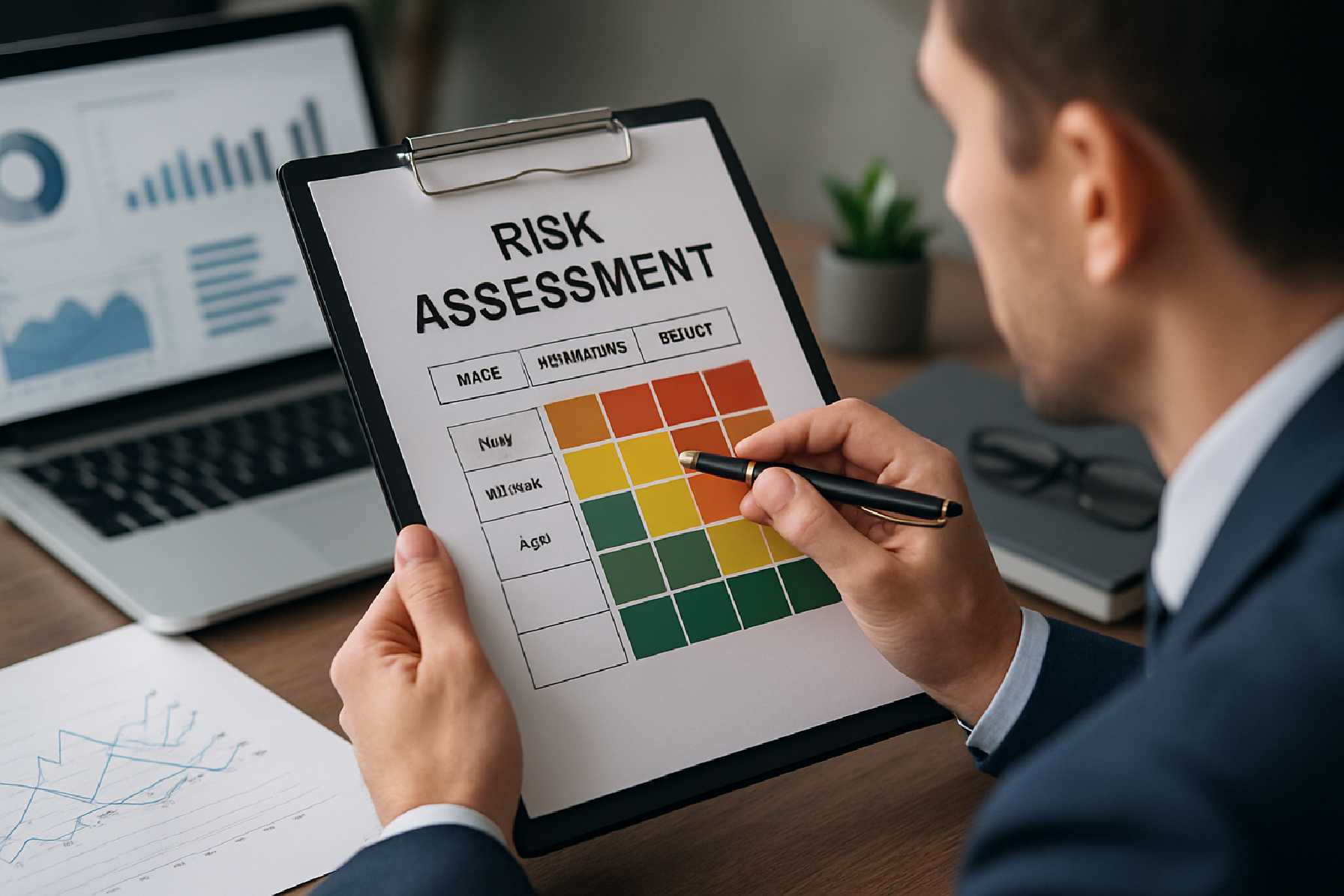
The strongest services do more than generate a heat map. They examine how work is actually performed.
Consider vendor qualification. A sponsor may have an approved vendor list, executed quality agreements, and onboarding documents in place. On paper, the system looks compliant. But a risk assessment may reveal that reassessments are not performed consistently, critical vendors are not ranked by service impact, and issue escalation from the vendor to the sponsor is not clearly defined. In a clinical trial, that can become a serious oversight gap, especially when the vendor handles data, safety reporting, eCOA systems, randomization tools, or investigational product logistics.
Training management is another common example. Many organizations can show that staff completed required GCP compliance training. That is not always the same thing as demonstrating role-specific competence. A useful risk assessment will look beyond completion records and ask whether training is mapped to responsibilities, updated after procedural changes, reinforced after deviations, and assessed for effectiveness. This is particularly relevant in organizations offering Clinical Quality Assurance Services, where quality oversight depends heavily on professional judgment, not just attendance logs.
Document control also deserves close attention. In clinical studies, outdated forms, uncontrolled templates, inconsistent versioning, and delayed approvals can cause avoidable findings. A risk assessment service may identify whether the formal process exists but is operationally too slow, too manual, or too fragmented across departments to perform reliably under study pressure.
Risk-based quality management in action
Risk-based quality management is often discussed in relation to clinical trial conduct, but it is just as important at the system level. An organization does not need to assess every process with equal depth. It should focus resources where process failure would have the greatest effect.
For example, a biotech company preparing to expand from early-phase research into a larger multinational study may decide to assess the maturity of its quality management system before vendor onboarding begins. The review might identify several issues: SOPs written for a smaller operating model, inconsistent approval workflows for protocol deviations, weak tracking of outsourced activities, and no formal method for evaluating CAPA effectiveness across studies.
None of these issues necessarily means a study is currently noncompliant. But together they signal elevated operational risk. Left unaddressed, they can lead to recurring deviations, delayed issue escalation, poor documentation quality, and a more difficult path through sponsor audits or regulatory inspections.
This is where ISO Quality Management services become practical rather than theoretical. They help organizations prioritize action. Instead of rewriting every procedure at once, the company can focus first on the highest-risk processes, define ownership, improve controls, and build a staged remediation plan.
The link to GCP auditing, CAPA, and inspection readiness
Risk assessment should not sit in isolation from the rest of the quality program. In well-run organizations, it informs internal audit planning, supplier oversight, training priorities, and management review.
For teams involved in GCP Auditing Services or Clinical Research Audit Services, risk assessment helps define where audit effort should go. A high-risk vendor managing critical trial technology may justify a focused vendor audit. A site network with recurring consent documentation issues may require targeted clinical site audits. A new electronic quality management platform may need a system audit with attention to access control, change management, and record integrity.
That said, an audit is not the same as a risk assessment. An audit is an independent, systematic examination of evidence against defined criteria. A risk assessment is an evaluation of potential harm, control effectiveness, and exposure. The two work best together. Risk assessment helps determine scope and priority; auditing tests whether controls actually work.
The same is true for CAPA management. A mature CAPA system should do more than record corrections. It should identify root causes, assign practical actions, and verify whether those actions prevented recurrence. Risk assessment services often reveal where CAPA programs are administratively complete but strategically weak. Common signs include repeated issues across studies, actions that address symptoms rather than causes, and closure decisions made without effectiveness checks proportionate to the risk involved.
Inspection readiness also benefits from this work. Regulators do not inspect organizations simply to confirm that procedures exist. They examine whether responsibilities are clear, whether records support what was done, whether problems were recognized and addressed, and whether oversight matches the complexity of the work. An ISO-aligned risk assessment can help expose the silent weaknesses that become visible during inspection interviews and document review.
What good risk assessment services look like
Not all assessments are equally useful. The most effective providers combine quality system knowledge with operational understanding of clinical research.
A practical service should begin with scope. Is the organization assessing its enterprise quality management system, a particular process such as supplier quality management, or a clinical function such as study start-up controls? The answer shapes the methodology.
It should also use evidence, not assumptions. That usually means reviewing SOPs, forms, metrics, deviation trends, CAPA records, audit outcomes, training files, quality agreements, and process maps, then testing how those controls work in live practice through interviews and sample-based review.
The output should be usable. Senior leaders need more than a technical report. They need a clear view of high-risk areas, likely impact, control gaps, and practical remediation options. Process owners need clarity on what to fix, in what order, and with what evidence of effectiveness.
For organizations operating internationally, context is essential. Clinical research obligations vary by jurisdiction, study type, and product category. A medical device company conducting clinical investigations may not face the exact same quality framework as a pharmaceutical sponsor running multinational drug trials. A useful assessment will account for those differences instead of applying one generic model to every setting.
Choosing a provider without turning the exercise into a checkbox
When selecting ISO Quality Management consulting or risk assessment support, organizations should look for competence in both quality systems and the regulated clinical environment.
That includes familiarity with clinical study workflows, outsourced service models, GCP-relevant documentation, and the realities of sponsor-CRO-site interactions. A provider who understands manufacturing quality alone may miss important clinical control points. Conversely, a purely operational clinical consultant may not be strong in system design, nonconformity analysis, or management system architecture.
Independence matters too. A credible assessment should challenge accepted habits where necessary. It should not simply validate existing procedures because they are already approved internally.
Methodology also deserves scrutiny. Readers should ask whether the service includes risk criteria, scoring logic where relevant, interview plans, document sampling, and a transparent explanation of how findings are prioritized. If the assessment produces only broad observations without a defensible method, it may be difficult to use for governance or improvement planning.
Training capability can also be valuable. In some cases, the most sustainable outcome comes from pairing assessment work with targeted ISO Quality Management training, Clinical Quality Training, or role-based development for process owners. But training should reinforce system improvement, not replace it.
Common pitfalls organizations should avoid
One common mistake is treating risk assessment as an annual formality. When that happens, the exercise produces generic language, broad categories, and little operational change. Risks become static entries in a register instead of active management decisions.
Another is overcomplication. Some teams build elaborate scoring systems that create the appearance of rigor but are too cumbersome to maintain. In practice, simpler models often work better if they are consistently applied and tied to decisions.
A third pitfall is separating quality risk from business reality. In clinical research, staffing turnover, rapid growth, decentralized trial models, new digital platforms, and aggressive study timelines are not just operational issues. They are quality risks if controls are immature or oversight is weak.
Finally, organizations sometimes focus only on findings that are easy to document. Cultural risks, unclear accountability, and dependence on informal workarounds can be harder to capture, but they often sit behind recurring deviations and preventable nonconformities.
Summary table: ISO Quality Management risk assessment in clinical settings
| Topic | Practical significance | Potential risk | Recommended action |
|---|---|---|---|
| Vendor qualification | Supports oversight of outsourced GCP-relevant activities | Critical vendors managed without proportionate review or escalation pathways | Classify vendors by impact and align qualification and reassessment depth to risk |
| Training management | Helps ensure staff are competent for assigned responsibilities | Training records exist, but role-specific competence is not demonstrated | Link training to job function, procedural change, and effectiveness review |
| Document control | Protects consistency, traceability, and use of current procedures | Outdated templates or uncontrolled versions used in active studies | Simplify approval workflows and strengthen version control and access practices |
| CAPA management | Supports sustainable correction and prevention of recurrence | Repeated deviations due to weak root cause analysis or ineffective follow-up | Use risk-based effectiveness checks and trend recurring issues across studies |
| Audit planning | Directs quality oversight to areas of greatest exposure | Audit resources spread evenly instead of focusing on critical processes | Use risk assessment results to prioritize system, site, and vendor audits |
Questions to ask before using ISO Quality Management risk assessment services
Before launching an assessment or selecting a provider, quality leaders should ask a few grounded questions:
Which processes in our clinical quality management system have the greatest potential impact on participant safety, data integrity, or regulatory credibility if they fail?
Do our current controls work reliably in real study conditions, or do they depend on individual experience, manual workarounds, or informal escalation?
How will assessment results be translated into action, ownership, timelines, and follow-up rather than remaining a stand-alone report?
Does the service provider understand both ISO Quality Management principles and the practical realities of GCP-relevant clinical operations?
How will we evaluate whether corrective actions actually reduced risk and improved process performance over time?
The bottom line
ISO Quality Management risk assessment services are most valuable when they help organizations see their quality system as it really operates, not as it was designed to operate. In clinical research, that distinction is crucial.
A well-structured assessment can sharpen Clinical Quality Management, support smarter audit planning, strengthen supplier oversight, improve CAPA effectiveness, and expose control weaknesses before they become inspection issues or study-level failures. It will not eliminate every risk, and it does not replace jurisdiction-specific regulatory advice, GCP obligations, or product-specific requirements. But it can give quality leaders a clearer basis for action.
For sponsors, CROs, biotech companies, pharmaceutical organizations, and medical device firms, that is the practical promise of the work: not a certificate, not a slogan, but a more resilient quality system that is better able to support compliant, consistent, and credible clinical research.