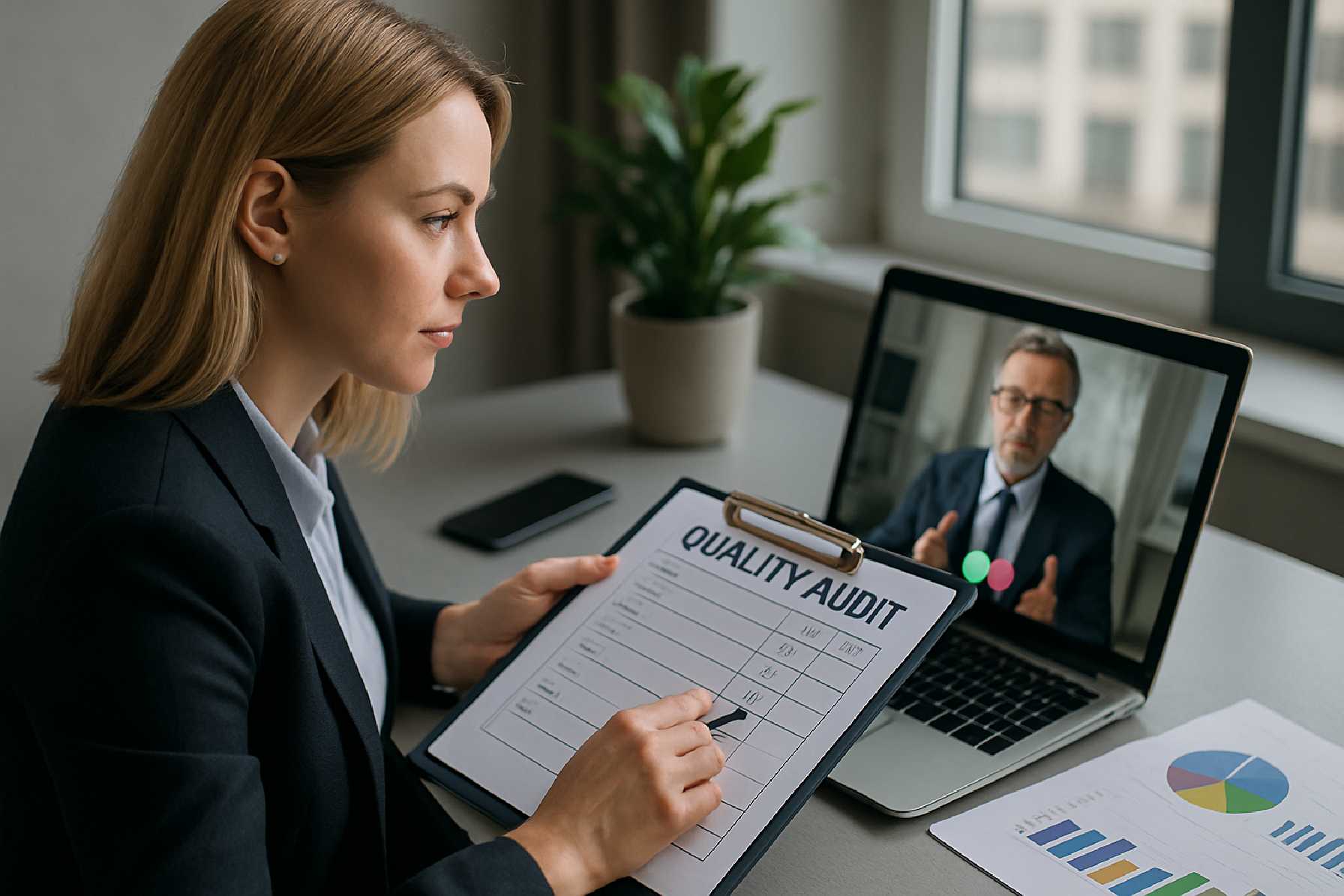
Remote Quality Audits in Clinical Quality Assurance: How Technology Is Reshaping Compliance Across Global Biotech Operations
For clinical research and biotechnology organizations, quality oversight no longer fits neatly inside a conference room or a site visit itinerary. Trials are global, vendors are distributed, data flows through multiple systems, and timelines are tighter than ever. In that environment, remote quality audits have moved from contingency plan to strategic tool.
That shift matters for Clinical Quality Assurance professionals, sponsors, CROs, medical device companies, and service providers alike. Remote auditing can reduce travel burden and improve access to expertise, but its real value is broader: it can strengthen oversight, support faster issue detection, and help organizations maintain a more agile Clinical Quality Management approach across borders.
Used well, remote audits do not replace quality thinking. They extend it. They allow organizations to examine processes, records, systems, and responsibilities without always being physically present, while still keeping the core objectives of auditing intact: protecting study participants, preserving data integrity, and evaluating whether activities are being performed in line with applicable requirements and internal procedures.
Why Remote Audits Matter in Clinical Research Quality
Clinical research depends on controlled processes. A protocol must be followed. Safety information must be handled correctly. Essential documents must be complete, current, and traceable. Vendors must do what they were contracted and qualified to do. When these controls weaken, the impact is not only operational. It can affect participant protection, regulatory inspection readiness, and the credibility of study results.
This is where Clinical Quality Assurance differs from routine quality control. Quality control usually focuses on checking specific outputs or transactions, such as document completeness or data review. Quality Assurance is broader. It evaluates whether the systems and processes used to generate those outputs are suitable, followed, and effective. Clinical Quality Management goes wider still, covering how an organization plans, oversees, measures, and improves quality across the study lifecycle.
Remote audits sit within that larger quality framework. They are not the same as monitoring visits, and they are not regulatory inspections. A Good Clinical Practice audit is an independent, systematic review of activities, records, systems, or vendors against defined criteria. The audit may focus on an investigator site, a CRO, a laboratory, a trial master file, a computerized system, or a specific process such as deviation management or informed consent handling.
In a globalized biotech landscape, the question is no longer whether remote auditing is possible. The more useful question is when it is appropriate, what it can reliably assess, and what controls are needed to make it effective.
What a Remote Quality Audit Actually Looks Like
A remote audit uses digital tools to review quality and compliance without requiring the auditor to travel on site. In practice, that may include secure document sharing, cloud-based review portals, video conferencing, live interviews, screen-sharing sessions, and virtual facility walkthroughs.
An auditor may review the site’s delegation log, informed consent files, training records, temperature excursion handling, protocol deviation logs, or source documentation processes through a secure platform. For a vendor audit, the review might focus on SOPs, qualification records, validation documentation, issue escalation, CAPA management, and staff training matrices.
The audit method can vary depending on scope and risk. Some remote audits are fully virtual. Others are hybrid, combining remote document review with a shorter on-site visit. That distinction is important. Not every audit objective is equally suited to remote assessment, especially when physical observation, environmental conditions, or direct access to original materials are central to the audit evidence.
The Operational Advantages Are Real, but They Are Not Only About Cost
The most obvious benefit of remote auditing is reduced travel. For sponsors and CROs with international study portfolios, that can mean lower costs, fewer scheduling delays, and less disruption for audited sites and vendors. A system audit that once required flights, hotel coordination, and multi-day calendars may now begin with document review in advance and more focused interviews online.
But cost savings alone do not explain the appeal. Remote auditing can also improve flexibility. It becomes easier to involve subject matter experts in data management, pharmacovigilance, validation, TMF oversight, biostatistics, or regulatory affairs without moving them physically to the audit location. For complex studies, that can deepen the quality of the assessment.
There is also a speed advantage. When a serious deviation trend appears, when a new vendor is onboarded, or when an organization needs targeted GCP compliance auditing before a milestone or inspection, a remote format can often be launched faster than a traditional visit.
That speed supports a more proactive quality model. Instead of waiting for annual cycles or travel windows, teams can perform focused process reviews earlier, identify weaknesses sooner, and start corrective and preventive action before minor gaps become systemic problems.
Remote Audits and Data Integrity: A Better Audit Trail, If Managed Correctly
One of the strongest arguments for remote auditing is that digital review environments can create a more organized and traceable audit trail. Version control, access permissions, upload history, meeting recordings where permitted, and centralized repositories can make audit documentation easier to follow than a fragmented exchange of paper and email attachments.
That matters in Clinical Research Quality Management because auditability is not only about having records. It is about being able to show what was reviewed, when it was reviewed, which version was used, and how conclusions were reached.
Still, data integrity is not automatic just because a process is digital. Organizations need secure platforms, controlled access, clear document handling rules, and practical procedures for managing confidential information. Clinical trial records may contain sensitive personal data, proprietary methods, or commercially significant development information. Remote auditing tools must support confidentiality, and organizations must confirm that their approach aligns with applicable privacy, contractual, and regulatory expectations in the jurisdictions involved.
Where Remote Audits Work Best
Remote methods are especially useful for document-heavy and system-based assessments. Examples include vendor qualification reviews, SOP-based process audits, trial master file audits, training program assessments, CAPA follow-up, and selected clinical site audits where records are well organized and electronic access is feasible.
Consider a sponsor qualifying a specialty laboratory in another region. A remote audit can efficiently assess quality governance, training controls, deviation handling, document control, and relevant computerized systems before any shipment or sample activity begins. If concerns remain around specimen flow, physical segregation, or environmental controls, a later on-site visit can be added.
Or take a biotech company preparing for a critical study expansion. A remote process audit of protocol deviation management across several countries may reveal inconsistent classification, weak root cause analysis, or delayed CAPA closure. That insight can support targeted training, SOP clarification, and stronger oversight before the issue appears in an inspection.
These are not theoretical efficiencies. They are practical ways to strengthen oversight in a decentralized operating model.
The Main Challenges: Technology, Communication, and Audit Judgment
Remote auditing is not simply an on-site audit delivered through a webcam. It changes how evidence is gathered, how interviews are conducted, and how observations are tested. That introduces new risks.
The first is infrastructure. Weak internet connections, incompatible platforms, poor audio quality, limited camera access, or inconsistent file upload practices can slow the audit and reduce confidence in the evidence. A remote audit depends on preparation more than many organizations expect.
The second challenge is communication. Auditors cannot rely as easily on informal observation, facility context, or spontaneous access to records. Interviews require tighter planning. Escalation paths must be clear. Time zones, language differences, and local working practices can affect the flow of the audit, particularly in multinational studies.
The third challenge is judgment. Some issues are easier to understand in person. A virtual walkthrough may show a room, but not necessarily the real rhythm of operations. A scanned file may be legible, but not reveal how staff actually retrieve, reconcile, and use records in daily work. This is why audit scope and method should be risk-based rather than automatic.
In other words, remote auditing is highly effective for many purposes, but it is not a universal substitute for every on-site activity.
What Clinical Quality Management Teams Need to Put in Place
Organizations that want remote audits to add value need more than software licenses. They need a controlled framework. That framework should sit within the broader Clinical Quality Management System and align with how the organization handles audit planning, vendor oversight, documentation, issue escalation, and CAPA.
At minimum, teams should define when remote audits are appropriate, how audit evidence will be collected, what platforms may be used, how confidentiality will be protected, and what to do if the remote format prevents adequate assessment. SOPs do not need to be overly complex, but they should be clear enough to support consistency across auditors, studies, and regions.
Training also matters. This includes not only GCP Compliance Training for operational staff, but practical preparation for auditors and auditees on remote methods. Effective GCP Audit Training in this context may include interview techniques for virtual settings, evidence sampling, screen-based document review, handling of restricted records, and follow-up of remote observations. Experience remains essential; no single course can qualify an auditor for every type of audit assignment.
Organizations using ISO Quality Management principles may recognize familiar themes here: documented processes, competence, risk-based thinking, supplier control, internal audit discipline, and continual improvement. Those principles can support remote audit consistency, but they do not replace study-specific GCP responsibilities or product-specific regulatory obligations.
Regulatory Context: Acceptance Is Growing, but Context Still Matters
Across clinical research and life sciences, regulators and industry have become more familiar with remote oversight approaches. That said, expectations are not identical across jurisdictions, product categories, or audit objectives. A biotech sponsor, a medical device company, and a CRO may each face different practical expectations depending on study design, data systems, privacy rules, and the records under review.
For that reason, organizations should avoid treating remote auditing as inherently sufficient in every circumstance. The stronger position is to justify the method based on scope, risk, record accessibility, confidentiality, and the need for physical observation. In some cases, a hybrid model will be the most defensible approach.
This is particularly relevant for GCP audit preparation and regulatory inspection readiness. Remote audits can be very effective in identifying documentation gaps, incomplete CAPA records, weak vendor oversight, or inconsistent training evidence. However, if inspection readiness depends heavily on facility flow, investigational product controls, or site-level operational behaviors, on-site verification may still be necessary.
A Practical Decision Model for Remote Audit Planning
For quality leaders, the better question is not “remote or on-site?” in the abstract. It is “what is the audit objective, and which method will generate sufficient, reliable evidence?”
A risk-based quality management approach can help. Higher-risk studies, first-in-class products, new vendors, critical data processes, vulnerable populations, or sites with previous significant findings may justify deeper or hybrid review. Lower-risk follow-up audits, mature vendors with strong oversight history, or focused CAPA verification may be well suited to remote execution.
The same logic applies across the clinical study lifecycle. During vendor selection, remote reviews can support qualification. During study conduct, focused process audits can test protocol compliance, documentation quality, or issue management. During closeout, remote review may help evaluate record completeness and retention readiness. The audit method should follow the quality question being asked.
Choosing External Support Without Turning It Into a Procurement Exercise
Many organizations rely on external auditors, consultants, or training providers for specialized support. When evaluating Clinical Quality Assurance Services or GCP Auditing Services, the most useful criteria are practical: relevant audit experience, therapeutic and operational knowledge, independence, report quality, understanding of remote methods, data confidentiality practices, and ability to distinguish true compliance risk from administrative noise.
The same applies to training providers. Training for GCP Auditing should not be judged only by course titles. Organizations should look at whether the training addresses scope definition, evidence collection, virtual interviewing, observation writing, CAPA review, and auditor judgment. Competence develops through a combination of education, clinical research experience, supervised practice, and continuing development.
Summary Table
| Topic | Practical Significance | Potential Risk | Recommended Action |
|---|---|---|---|
| Remote audit format | Improves flexibility, speed, and access to expertise across regions | Poor fit for audits that require strong physical observation | Select remote, on-site, or hybrid methods based on audit objective and risk |
| Technology platform | Supports document review, interviews, and audit trail traceability | Access failures, weak security, incompatible systems | Use secure, validated or controlled platforms with clear access rules |
| Documentation review | Allows efficient assessment of SOPs, training, CAPA, and study records | Incomplete files, version confusion, restricted visibility | Define document lists, naming conventions, and version control before the audit |
| Communication | Critical for interviews, clarification, and timely issue resolution | Time zone delays, language barriers, unclear responsibilities | Set a communication plan, roles, agenda, and escalation process in advance |
| Clinical Quality Management integration | Makes remote auditing part of a broader quality system rather than a stand-alone activity | Inconsistent execution and weak follow-up | Align audit practice with SOPs, CAPA, vendor oversight, and management review |
Questions Teams Should Ask Before Relying on a Remote Audit
Before selecting a remote format, quality leaders and study teams should ask a few practical questions:
- What is the core audit objective, and can it be assessed credibly without direct on-site observation?
- Do the sponsor, site, vendor, and auditors have the secure technology and document control processes needed for efficient review?
- Which records, systems, interviews, or walkthroughs are essential to evaluate participant safety, data integrity, and protocol compliance?
- If findings are identified, is there a clear process for CAPA ownership, follow-up, and verification across regions or vendors?
- Does the audit team have the right combination of GCP knowledge, operational experience, and remote auditing skills for this specific assignment?
The Bottom Line
Remote quality audits are no longer a temporary workaround. In modern biotech and clinical research, they are an established part of the quality toolkit. When embedded in a thoughtful Clinical Quality Management strategy, they can improve efficiency, broaden access to expertise, and support earlier detection of compliance and process weaknesses.
But the strongest remote audit programs are not built on convenience alone. They are built on disciplined planning, secure systems, trained auditors, clear procedures, and a risk-based understanding of what can and cannot be assessed well from a distance.
For organizations working across multiple countries, vendors, and study phases, that balanced approach is increasingly important. Remote auditing can strengthen oversight and inspection readiness, but only when it is used with professional judgment and anchored in the fundamentals of clinical research quality: participant protection, reliable data, documented processes, and continuous improvement.