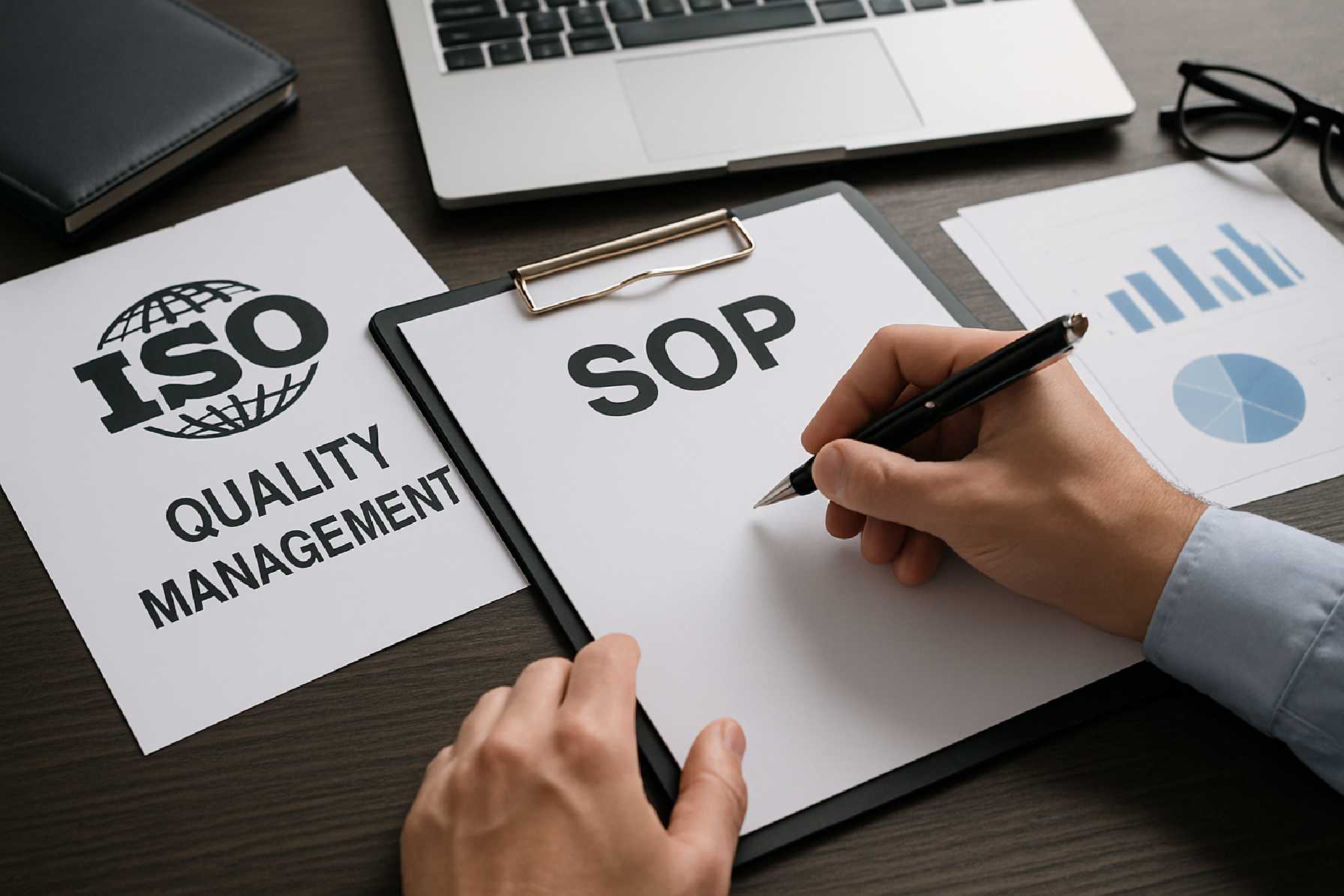

Practical GCP Audit Training Program: Building Real Auditor Capability in Clinical Quality Assurance
In clinical research, audit training often sounds straightforward on paper. Teach the regulations, explain the checklist, review a few findings, and send people into the field. In practice, that approach rarely produces confident, reliable auditors.
A practical GCP audit training program is not simply about memorizing Good Clinical Practice requirements. It is about developing judgment: how to assess evidence, ask the right questions, distinguish a documentation lapse from a systemic weakness, and understand what an audit finding may mean for participant safety, data integrity, and sponsor oversight.
That is why the topic matters so much to Clinical Quality Assurance. Organizations can have strong procedures, experienced monitors, and well-written training records, yet still struggle when internal auditors or quality teams are asked to evaluate investigator sites, vendors, trial master files, or clinical processes in a consistent and meaningful way.
For pharmaceutical companies, biotechnology companies, medical device sponsors, and clinical research organizations, the gap is rarely a lack of effort. More often, it is the difference between theoretical GCP knowledge and practical audit capability.
Why practical training matters more than a slide deck
Good Clinical Practice, commonly called GCP, is the international ethical and scientific framework for designing, conducting, recording, and reporting clinical research involving human participants. In broad terms, it aims to protect trial participants and support credible study data.
But a GCP audit is not the same as monitoring, quality control, or a regulatory inspection.
Monitoring is typically an ongoing sponsor or CRO activity focused on study oversight and issue detection during trial conduct. Quality control usually refers to operational checks performed as part of routine work, such as document review or data verification. A regulatory inspection is conducted by a health authority such as the FDA, EMA member-state inspectorates, MHRA, or other national agencies, depending on jurisdiction.
An audit, by contrast, is an independent and systematic examination of trial-related activities and documents to determine whether they were conducted, and data were recorded and reported, in accordance with the protocol, sponsor procedures, GCP, and applicable regulatory requirements. The exact framework can vary by region and study type, but the principle is consistent: an audit evaluates whether the quality system is working as intended.
That distinction is crucial in any GCP Auditing Training program. People who are excellent monitors do not automatically become effective auditors. They may know what happened at a site, but not yet know how to assess root causes, sampling logic, audit independence, or the quality system implications behind repeated deviations.
What a practical GCP audit training program should actually teach
The strongest programs combine regulatory understanding with applied audit skills. That means participants should learn not only what the rules say, but also how to work through real audit situations.
At a minimum, effective training for GCP auditing should address audit planning, scope definition, risk assessment, interview technique, document review, evidence collection, sampling, observation writing, reporting, CAPA evaluation, and follow-up.
Each of those elements sounds procedural. In reality, each requires professional judgment.
Consider sampling. A new auditor may think reviewing more records always leads to a better audit. An experienced auditor knows that audit value comes from risk-informed sampling. If a site has a history of protocol deviations around informed consent timing, the sample should be designed to test that control point, not just produce volume.
Or consider interviewing. Inexperienced auditors sometimes ask leading questions or turn interviews into training sessions. A stronger approach is neutral, structured, and evidence-focused: who performs the activity, what record demonstrates it, how exceptions are handled, and whether the process is consistent with the approved procedure.
These are not skills that develop through regulations alone. They usually require case-based learning, mentored practice, and feedback on actual audit work.
From compliance language to operational reality
One of the biggest weaknesses in many GCP Auditor Training courses is that they stay at the level of compliance terminology. Participants hear about deviations, nonconformities, CAPA, and risk-based quality management, but may leave without understanding how those concepts affect study operations.
A practical program translates quality language into operational significance.
For example, a deviation is not just a procedural exception. Depending on the context, it may reflect a training gap, an unrealistic protocol requirement, poor site oversight, inadequate vendor handoff, or a weak escalation pathway. A finding in temperature log documentation may seem administrative until it raises questions about investigational product control and product accountability.
Similarly, CAPA management is not just a post-audit formality. Corrective and preventive action is the mechanism by which an organization responds to the problem found, investigates the cause, and tries to prevent recurrence. Practical training should therefore teach auditors how to judge whether a proposed CAPA addresses the real issue or merely restates the problem in cleaner language.
This is where Clinical Quality Assurance becomes tangible. It is not an abstract governance function. It is the discipline that helps organizations detect process weakness before it affects patient protection, study credibility, or inspection readiness.
The place of GCP audit training in Clinical Quality Management
Clinical Quality Management is broader than auditing. It includes the structures, responsibilities, processes, training, oversight, escalation, and continuous improvement activities used to manage quality across the clinical study lifecycle.
Audit training sits inside that larger system.
A well-run program should help participants understand where auditing fits in relation to SOPs, risk management, vendor qualification, training management, issue escalation, and management review. In other words, auditing should not be taught as a stand-alone event. It should be framed as one component of a Clinical Quality Management System.
This point matters because organizations sometimes overestimate what audits can achieve. Good Clinical Practice auditing can identify gaps, test controls, and reveal systemic risk. It cannot, by itself, compensate for weak study design, poor operational planning, inadequate resourcing, or unclear sponsor-vendor responsibilities.
Nor should GCP auditing be confused with ISO Quality Management, although there can be useful overlap. ISO-based quality systems often emphasize documented processes, corrective action, document control, competency, and continual improvement. Those principles can support clinical quality maturity. Still, ISO certification is not the same as regulatory compliance, and a training program should make that distinction clear.
What practical training looks like in real organizations
The most credible GCP Audit Training programs are built around realistic scenarios.
A sponsor preparing a new internal audit team, for example, may use mock investigator site files with intentionally embedded issues: missing delegation signatures, inconsistent source documentation, delayed SAE reporting records, or conflicting versions of essential documents. Trainees learn to review records, identify what matters, and decide whether the issue is isolated, systemic, or inconclusive.
A CRO may take a different approach and focus on vendor audits for clinical trials. In that setting, trainees may need to assess how a laboratory, central imaging vendor, ePRO supplier, or data management provider controls training, change management, subcontracting, computerized systems, and deviation handling. The audit logic differs because the evidence, responsibilities, and risk profile differ.
A medical device company running investigations under multiple regulatory frameworks may need training that addresses jurisdictional differences more explicitly. Depending on geography and product type, local regulations and authority expectations may shape audit emphasis, documentation practices, or site oversight responsibilities.
In every case, the best programs are anchored in actual roles. A site-facing auditor, a process auditor, and a quality manager overseeing outsourced studies do not need identical depth in every topic.
Core elements of a strong GCP Auditing Training program
There is no single universal curriculum that fits every organization, but several elements consistently separate useful programs from superficial ones.
Risk-based audit planning
Trainees should learn how to define scope based on study phase, complexity, participant risk, critical data, outsourcing model, geography, and past quality signals. This aligns with modern risk-based quality management thinking, even though the exact implementation approach may vary by sponsor and regulatory context.
Evidence-based auditing
Participants need practice linking statements, documents, and observed activities. An audit conclusion should not rest on assumptions or isolated impressions. It should be supported by objective evidence.
Observation grading and report writing
Writing a useful audit report is harder than many new auditors expect. Findings must be clear, factual, and traceable to evidence. They should explain why the issue matters without exaggeration. A vague observation creates weak CAPA. An overstated observation damages credibility.
Professional conduct and independence
Auditors need to understand how to remain objective, how to handle disagreement, and when to escalate concerns. Independence does not mean detachment from operational reality. It means being able to assess it fairly.
CAPA review and follow-up
Training should not stop at finding identification. Auditors should understand how to evaluate root cause analysis, proposed actions, due dates, effectiveness checks, and closure criteria.
Supervised practice
No course alone can qualify a person for every GCP audit assignment. Competence also depends on prior clinical research experience, subject-matter knowledge, supervised audits, and continuing professional development. Practical programs acknowledge that limitation rather than implying a certificate is enough.
Common gaps that training programs should address
Several recurring problems appear when organizations review the effectiveness of their GCP Compliance Training for auditors.
Too much emphasis on regulations, too little on audit execution.
Little differentiation between site audits, vendor audits, system audits, and process audits.
No realistic practice in interviewing or report writing.
Insufficient focus on data integrity and documentation reliability.
No discussion of how findings connect to participant safety or sponsor oversight.
Minimal follow-up after training to confirm competence in real work.
These gaps matter because poor audit execution can create false reassurance. An auditor may complete an agenda, hold interviews, and issue a report, yet miss a meaningful process failure because the training did not teach how to test the process behind the document trail.
Choosing a training provider or designing an internal program
For organizations seeking external GCP Auditing Services or specialist training support, the selection criteria should be practical and evidence-based.
Start with trainer credibility. Relevant experience should include actual GCP auditing work, not only general clinical operations or broad QA exposure. Site audits, vendor audits, and process audits each require different examples and teaching depth.
Then look at course design. Does the program use case studies, mock documents, interview exercises, and feedback on findings? Or is it mainly lecture-based? A practical course should show how auditors think, not just what they read.
It is also worth asking how the program addresses Clinical Research Quality Management more broadly. Does it explain how audits interface with SOPs, vendor oversight, CAPA management, and inspection readiness? That context helps participants use audit outputs effectively.
For internal programs, the same logic applies. Training should be role-specific, linked to your quality system, and reinforced through mentoring, observed audits, and periodic calibration among auditors. Calibration is especially important when multiple auditors are expected to grade similar issues consistently.
Why this matters for inspection readiness and operational resilience
Inspection readiness is often treated as a late-stage scramble. In reality, organizations are better prepared for authority inspections when they have an audit function that can identify weak signals early and escalate them clearly.
A practical GCP audit training program contributes to that readiness in several ways. It improves the quality of audit observations. It strengthens follow-up and CAPA management. It helps quality teams distinguish isolated errors from repeated control failures. And it creates a more reliable view of whether SOPs are actually being followed in live operations.
That has practical implications across the study lifecycle: site qualification, study start-up, monitoring oversight, vendor management, deviation review, closeout, and document retention. Better audits do not guarantee a clean inspection, and they should never be presented that way. But they can improve visibility into quality risk and support better decisions before issues become more serious.
Summary table: what a practical GCP audit training program should deliver
| Topic | Practical significance | Potential risk if weak | Recommended action |
|---|---|---|---|
| Audit planning | Focuses audit effort on critical processes and records | Low-value audits that miss important risks | Use risk-based scope definition and clear audit objectives |
| Interview and evidence collection | Helps confirm how procedures work in practice | Conclusions based on assumptions or incomplete evidence | Train auditors in neutral questioning and evidence tracing |
| Finding development | Supports clear, defensible observations and useful reports | Weak CAPA, inconsistent grading, poor credibility | Use case-based exercises and report writing review |
| CAPA review | Tests whether corrective actions address root causes | Repeated deviations and unresolved systemic issues | Include root cause and effectiveness evaluation in training |
| Role-specific application | Aligns training to site, vendor, system, or process audits | Auditors applying the wrong approach to the wrong audit type | Tailor training content to organizational audit needs |
Questions to ask before selecting or launching a GCP audit training program
Does the program teach auditors how to apply GCP requirements in real audit situations, or mainly how to recite them?
Is the training aligned to the kinds of audits our organization actually performs, such as clinical site audits, vendor audits, or process audits?
How will auditor competence be assessed after training: observation, supervised audits, report review, or ongoing calibration?
Does the program explain how audit findings connect to participant safety, data integrity, protocol compliance, and sponsor oversight?
How does the training address CAPA quality, follow-up, and the limits of auditing within our wider Clinical Quality Management system?
The bottom line
A practical GCP audit training program should do more than create awareness. It should build usable capability.
For Clinical Quality Assurance teams, that means training auditors to think critically, document carefully, evaluate systems fairly, and communicate findings in a way that supports improvement. For sponsors, CROs, sites, and service providers, it means recognizing that audit competence develops through structured learning, supervised experience, and continued calibration—not through regulations alone.
In a field where participant protection and credible data depend on disciplined execution, practical training is not a luxury. It is part of the quality infrastructure that helps organizations understand where they are strong, where they are vulnerable, and what they need to fix before those weaknesses matter more.
As always, the right training approach depends on study complexity, organizational maturity, product type, outsourcing model, and applicable regional requirements. But the principle is consistent across settings: when GCP audit training is practical, auditors become more useful, quality systems become more transparent, and compliance discussions become more grounded in evidence than assumption.